Jesse Watson
The Other Black GirlJesse Watson is a nationally known Black activist and YouTube personality whose public voice gives Nella Rogers a language for recognizing the limits of workplace inclusion. His year away from social media appears to promise a return on his own terms: he wants to write a book, and Wagner Books secures a meeting before other publishers can approach him. But the Jesse who arrives at the meeting seems strikingly unlike the incisive, unruly figure Nella has followed online. That contrast turns his publishing opportunity into a warning about what may have happened during his absence.
Public Voice and Political Critique
Jesse is an outspoken blacktivist with more than a million followers, including Nella and her friend Malaika. His manner is supercharged enough that merely bringing up his name can change the atmosphere at a dinner table. The narration presents that provocation as part of his public effect: his intensity draws attention, and sometimes discomfort, rather than asking his audience to meet him halfway.
Nella does not agree with everything he says. She thinks he goes too far in a ninety-minute video arguing that Black people should abandon CP Time. Yet his other arguments strike her as painfully perceptive. In particular, his warning about white people who make conspicuous efforts to demonstrate diversity helps her understand how concern for representation can become a shallow exercise in checking a box. His critique does not treat the presence of a character of color as proof that a work is representative; it asks whether that character has been rendered as a full person. Nella’s misgivings about Colin Franklin’s portrayal of Shartricia become legible alongside this standard: Shartricia is not merely present on the page, but is written as a flattened collection of stereotypes.
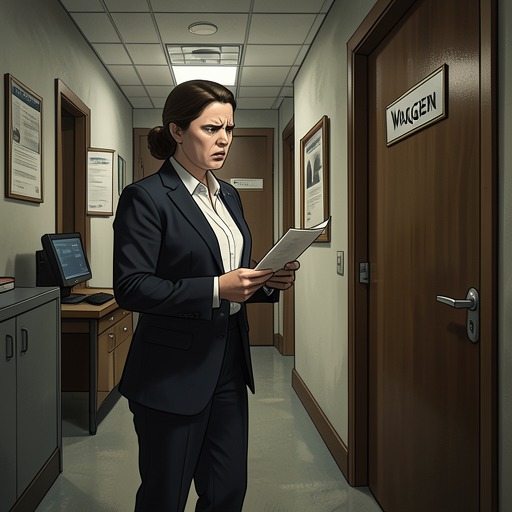
Jesse also gives Nella a framework for interpreting her own position among white colleagues. His warning that apparent acceptance may conceal anxiety about Black colleagues’ presence echoes the racial isolation she has experienced at Wagner. When Nella reads an anonymous threat for the fourth time, she remembers his words about being treated as an equal and recognizes the force of the recurring divide between herself and the people around her. The note, which she had considered throwing away, becomes evidence she needs to preserve. His commentary therefore shapes not only her opinions about books and activism but also how she reads danger in her working life.
Hiatus and Nella’s Hopes
Jesse’s decision to leave social media fascinates Nella. He says he wants time to work on things, and Malaika jokes that without his commentary she will have less help distinguishing a microaggression from something overtly racist. Nella doubts that Jesse has disappeared for good and imagines that the silence may make a future creative project more conspicuous. Her speculation is partly professional: she had previously suggested that Wagner invite him to contribute to its Forty Under Forty anthology, but Vera Parini rejected the idea, describing the way some people regard him as an emotional terrorist. Vera’s refusal does not end Nella’s interest in him. She privately imagines contacting him with a proposal compelling enough to make Wagner’s senior decision-makers sign him.
That plan takes on new urgency when Nella hears that Jesse is coming to Wagner. Richard Wagner tells her to keep the news private and invites her to join a small group meeting him. Jesse’s hiatus, it emerges, has lasted about a year and came from feeling overwhelmed by the news, politics, and constant activity online. Hazel-May McCall, who shares a mutual acquaintance with him, learned that he had wanted to write a book for some time. Through that connection, Wagner has arranged to meet him before other publishing houses have had the chance to pursue him.
The opportunity matters to Nella personally as well as professionally. Later, she tells Malaika that the chance to work with Jesse may come with her promotion, and Malaika reacts with elation. Jesse has become more than a public figure whose commentary Nella follows: a possible project with him is a concrete opening in her career. The prospect also links her ambition to her desire to leave Wagner, a connection she holds in mind while preparing to win him over.
The Book He Wants to Write
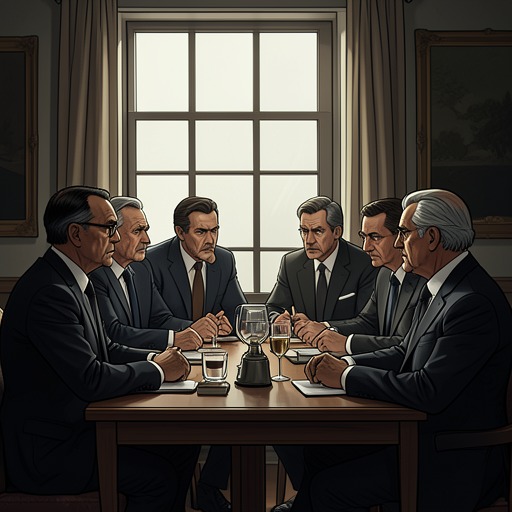
At the meeting, Nella expects Jesse to arrive late. She reaches the conference room early, checking her phone as she steps inside, and finds him already seated at the far end of the table. He holds a blue Wagner fortieth-anniversary mug and a ballpoint pen. His punctuality overturns her expectation before the conversation begins. He greets her warmly, saying he has heard much about her; Nella, starstruck, is delighted to meet him in person.
Wagner’s representatives initially leave Jesse to explain why he has come. He describes the break as necessary after the accumulated pressure of current events and online life. Asked what followed, he explains that an idea for a book came to him while he was sitting in a park: not the political tract Nella anticipates, but a graphic novel. He wants something positive, built around two characters from different worlds and backgrounds. One would be relaxed, the other tightly wound; brought together by a particular circumstance, perhaps as police officers, they would teach each other despite their differences.
The proposal surprises the room because it departs from the subjects Nella starts listing, such as police brutality, housing, and health care. Jesse makes clear that political issues need not be excluded from discussion, but that he does not want them to be the book’s focus. When Nella compares the premise to a graphic-novel version of Lethal Weapon, Jesse grins and says Mel Gibson is a hero of his. The exchange gives his pitch an unexpected lightness, while also showing that Nella’s assumptions about what an activist author ought to produce do not match the project he has actually imagined.
A Changed Presence
Nella has spent weeks imagining what Jesse might be like in person, cycling through guesses that range from diva to hippie to space cadet. None fits the man before her. He seems washed out and unlike the person she remembers from online appearances. His clear plastic glasses are new to her; his beard is closely cropped, his tiny twists are gone, and his hair lies flat and faintly shiny. These details make the change visible rather than abstract: the familiar public image has been altered at the level of his face, beard, and hair.
The hair is the detail that connects his appearance to the threat Nella has been investigating. As she notices it, she feels a pull to turn toward Hazel. After taking three slow, deep breaths, she meets Hazel’s eyes and sees a look of smug triumph. Nella begins coughing and asks to leave the room. The scene does not explain Jesse’s condition in dialogue, but its sequence—the slicked hair, Nella’s recognition, and Hazel’s expression—makes the meeting feel less like the unambiguous career opportunity Nella had hoped for. Her sudden departure interrupts her effort to persuade Jesse to work with her and leaves the room under the shadow of what she has recognized.
Narrative Role
Jesse’s importance to Nella’s story rests on the contrast between his public voice and his altered appearance. Earlier, his analysis helps her see the difference between meaningful representation and diversity used as a checklist, and helps her interpret a threat as evidence rather than dismissing it. His proposed graphic novel then confounds the expectation that his first book must be a direct political intervention. At Wagner, however, the meeting also places his body within the same troubling pattern that has made Nella suspicious of Hazel: his hair is visibly different, and Hazel appears triumphant when Nella notices.
The novel leaves the meeting’s implications unsettled in the supplied scenes. Jesse has come to Wagner because he wants to write; Nella has reason to hope that working with him could advance her career, and reason to fear what has happened to him. The gap between those hopes and her reaction gives his arrival its force. He is at once the activist whose words have clarified Nella’s predicament, a potential author with a surprisingly buoyant project, and a figure whose changed presentation turns a professional meeting into a moment of alarm.